Token-Based Device Payments: Synchronizing Recurring Deductions and Supplier Alerts in High-Volume Retail Periods
Written by Jakob Schmitz · Oct 27, 2026
Token-Based Device Payments: Synchronizing Recurring Deductions and Supplier Alerts in High-Volume Retail Periods
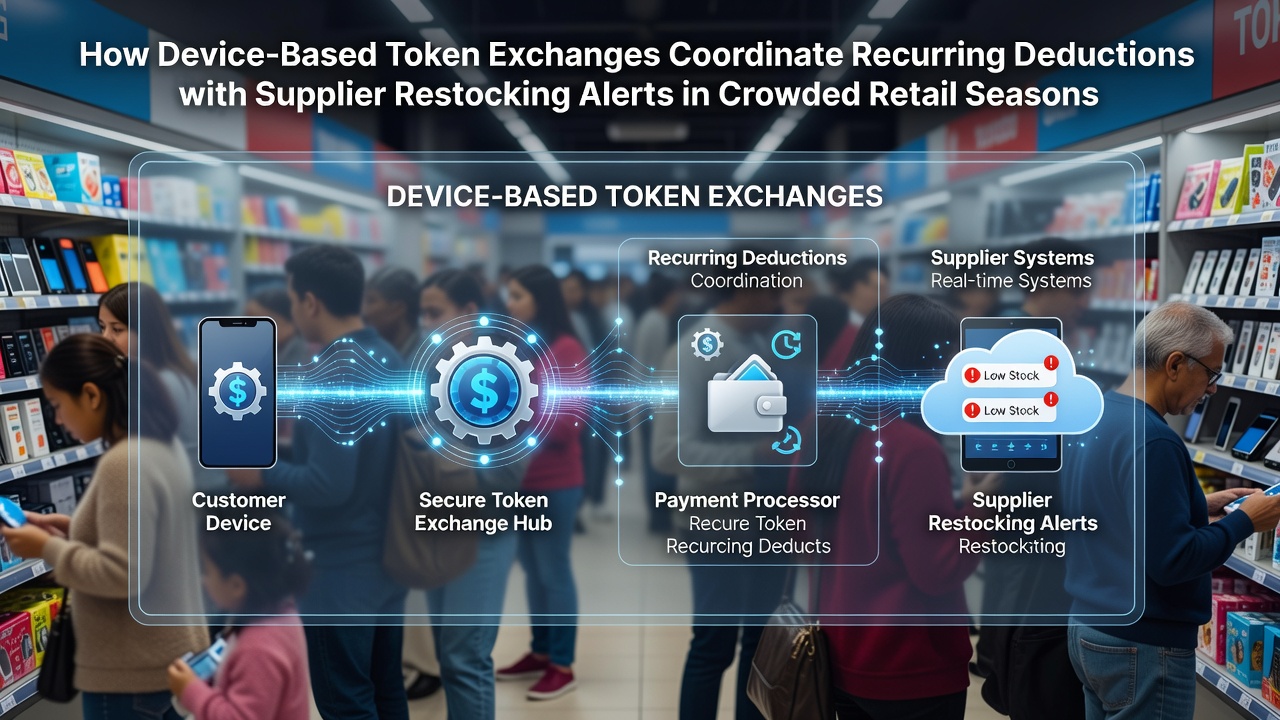
Retail operations in October 2026 rely on device-based token exchanges to manage the flow of recurring deductions while triggering supplier restocking alerts, and this coordination becomes especially visible during crowded shopping seasons when transaction volumes spike across mobile terminals and portable payment units.
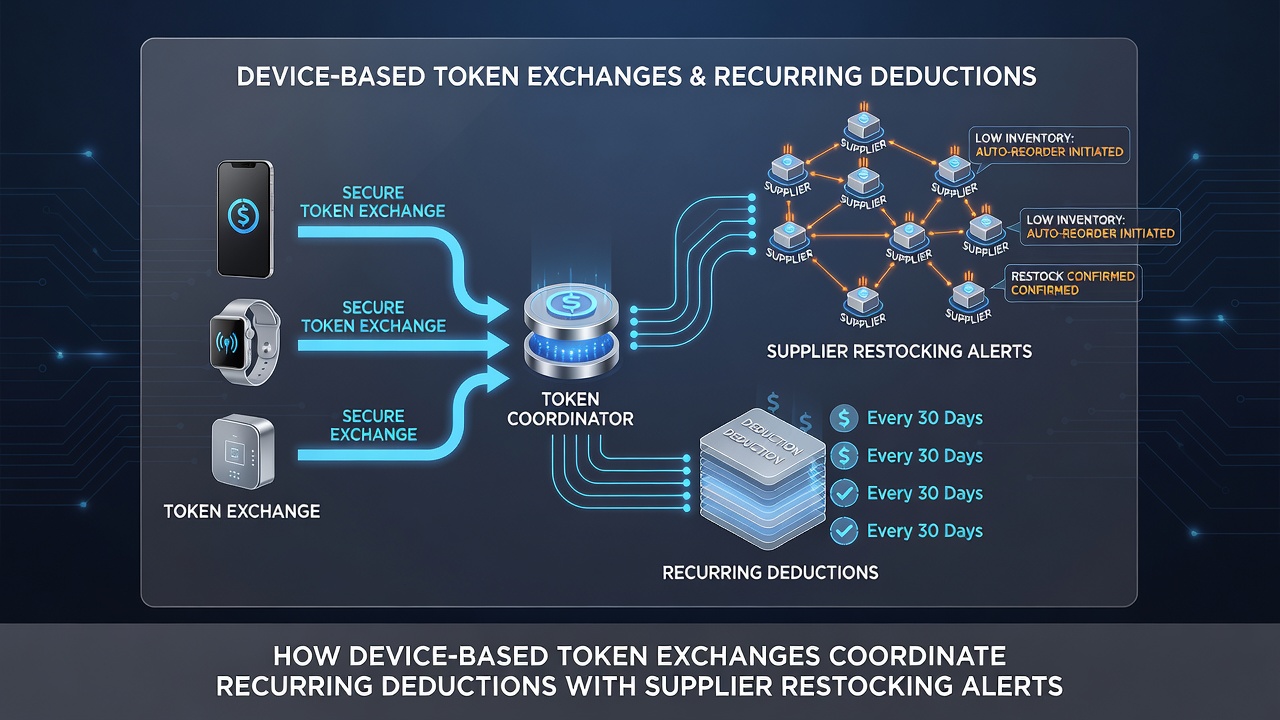
Device-based token exchanges operate by replacing sensitive card details with unique tokens that authorize payments without exposing full account information, and these systems link directly to recurring deduction schedules that merchants set up for subscription services or repeat purchases. When a customer completes a transaction on a handheld reader, the token processes the deduction through established banking channels while simultaneously feeding data into inventory management platforms that monitor stock levels in real time.
Mechanics of Token Exchange in Mobile Retail Settings
Portable payment devices generate tokens at the point of sale, and these tokens travel through secure gateways that validate each recurring charge against customer profiles stored in merchant databases. Data from the National Retail Federation shows transaction volumes rising sharply in the weeks leading into November, which means these token systems must handle increased loads without disrupting the link between payment confirmation and stock monitoring tools. Retailers configure their software so that once a token authorizes a deduction, the system checks current inventory counts and issues alerts to suppliers if quantities fall below preset thresholds.
Coordination happens through application programming interfaces that connect payment processors with warehouse management software, and this connection allows restocking notifications to activate automatically after a series of recurring deductions depletes specific product lines. In October 2026 observers note that many independent retailers use these integrated setups to maintain supply during peak periods when foot traffic and online orders both accelerate.
Integration Between Recurring Deductions and Inventory Signals
Recurring deductions occur on fixed intervals such as weekly or monthly cycles, and device-based tokens streamline this process by storing authorization details that eliminate the need for repeated card entry. Each successful deduction updates a shared data stream that inventory systems read to calculate remaining stock, which in turn prompts suppliers to prepare shipments before shelves empty. This sequence reduces the lag between sales activity and replenishment requests, particularly when multiple devices across a retail network report transactions simultaneously.
Studies from the European Central Bank indicate that tokenized payment volumes in the euro area grew steadily through 2025, and similar patterns appear in North American markets where retailers prepare for holiday demand. The linkage between deductions and alerts functions because tokens carry metadata that includes product identifiers, allowing the system to map each charge to specific inventory items without manual intervention.
Handling Peak Season Demands in Crowded Retail Environments
During crowded retail seasons the volume of device-based transactions multiplies, and token exchanges must scale to process recurring deductions while routing inventory data to suppliers without delay. Retail chains often deploy additional handheld terminals in October to capture higher foot traffic, and these units feed into centralized ledgers that track both payment confirmations and stock depletion rates. When thresholds trigger, automated alerts notify suppliers through electronic data interchange protocols that specify exact quantities and delivery timelines.
Payment processors maintain redundant pathways so that token validation continues uninterrupted even as restocking signals travel to distribution centers, and this dual functionality keeps retail operations fluid when customer demand peaks. Figures from Statistics Canada reveal elevated retail sales activity in the final quarter of recent years, underscoring the need for systems that align deduction processing with supply chain responses in crowded market conditions.
Data Pathways and Compliance Considerations
Information moves from device tokens through encrypted channels to both financial institutions and inventory databases, and compliance frameworks require that each step maintains separation between payment details and operational alerts. Merchants configure their platforms to log token activity separately from restocking messages, which helps satisfy audit requirements while preserving the speed of coordination. In October 2026 many systems incorporate additional verification layers that confirm token validity before allowing the deduction to influence stock level calculations.
Those who manage retail networks report that the synchronization between recurring charges and supplier notifications relies on consistent data formatting across platforms, and standardized protocols ensure that alerts reach suppliers in time to avoid stockouts during high-volume periods. The process continues without requiring staff to manually cross-reference payment records with inventory reports, which frees personnel to focus on customer service instead.
Conclusion
Device-based token exchanges provide the technical bridge that lets recurring deductions trigger supplier restocking alerts in a single automated flow, and this capability supports retail continuity when seasonal pressures intensify. As October 2026 progresses toward the holiday period, the established pathways between payment devices and inventory systems demonstrate how coordinated data exchange maintains operational balance across crowded retail networks.